Industrial Complementarity Boosts Stronger Penang-Guangdong Investment: InvestPenang CEO


By Sharon Hu, 21st Century Business Herald, SFC
"Guangdong abounds with innovation vitality, nurturing a large pool of professional talents and a great many high-quality local enterprises, ”said Dato' Loo Lee Lian, CEO of InvestPenang in an interview with 21st Century Business Herald in Penang of Malaysia.
In recent years, Guangdong and Penang maintain increasingly close bilateral investment cooperation, driven by their deep historical roots and highly complementary industrial sectors. In October this year, eight entities from Guangdong and Penang signed a number of memorandums of understanding and cooperation agreements at an investment promotion event, further boosting exchanges and cooperation in trade and investment between the two regions.
Dato' Loo pointed out that several favorable factors are also underpinning the economic and trade cooperation between Guangdong and Penang. First, the direct flight route between Guangzhou and Penang has brought great convenience, together with Malaysia’s visa-free policy for Chinese citizens valid for three months. Second, the similarities between Guangdong and Penang in culture, cuisine and climate have made Chinese enterprises feel a strong sense of affinity. Third, most of Penang’s workforce can speak Mandarin and Cantonese, which has further lowered the communication costs for both parties.
Though Penang is Malaysia’s second smallest state, it ranks among the top tiers in terms of economic development, with its export trade volume and foreign direct investment often topping the national rankings. Meanwhile, Penang has earned the reputation as the Silicon Valley of the East for its pivotal position in the global pan-semiconductor industry chain. At present, Penang has already forged close manufacturing cooperation with China.
"Over the past five years, I have witnessed a strong investment interest in Penang from Chinese enterprises. Nowadays, 70 Chinese companies have now set up and operated their businesses here," Dato' Loo stated.
Penang is committed to strengthening industrial clusters, and building on its existing semiconductor supply chain to cover upstream processes, front-end manufacturing and equipment sectors. "Chinese enterprises are now seeking to expand their businesses overseas and bring advanced technologies to Malaysia, while we are also looking for joint venture partners for Penang-based enterprises. Both sides share aligned goals," she added.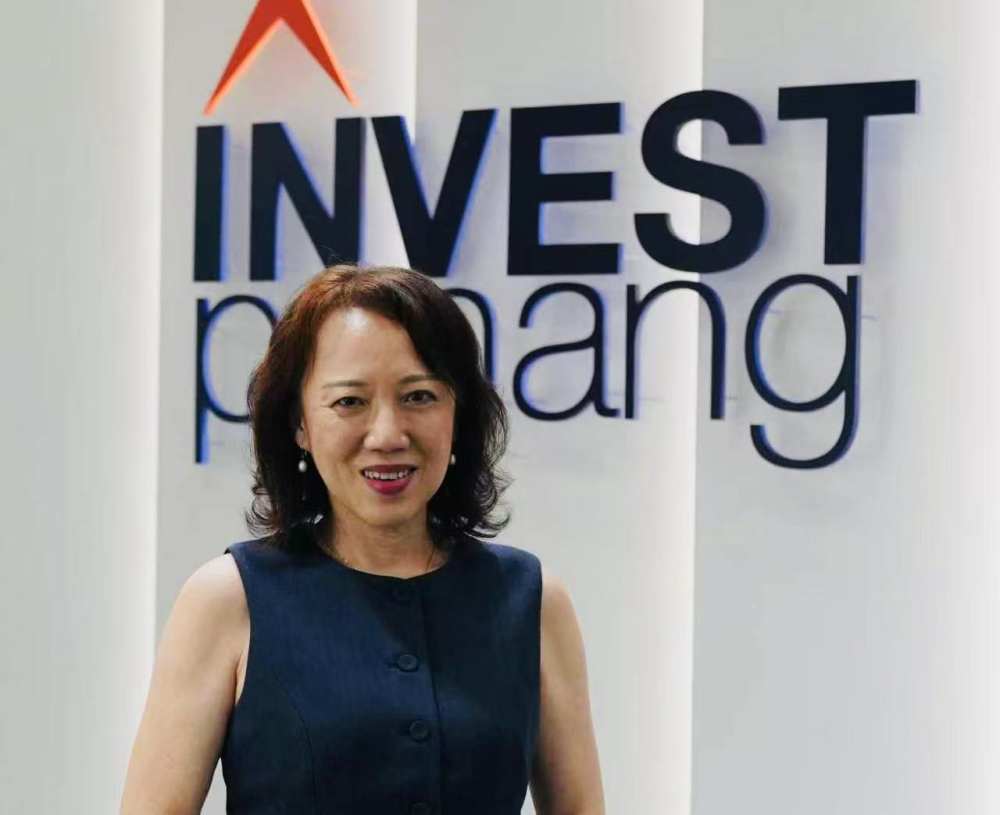
(Dato' Loo Lee Lian, CEO of InvestPenang photo/ Xiao Hang)
Guangdong is full of vibrant innovation
SFC: The 2025 China (Guangdong) - Malaysia (Penang) Investment Promotion Conference was successfully held in early October. Which industrial sectors of Penang were the focus of this conference? What impressions have these enterprises formed of Penang’s business environment and industrial development?
Loo Lee Lian: We highlighted Penang’s investment environment and various investment opportunities during the investment promotion conference, and also promoted our core industries, including electrical and electronics, semiconductors, medical technology, equipment automation, IoT solutions, as well as the digital economy sector.
Participants from Guangdong responded with remarkable enthusiasm and expressed strong interest in Penang’s industrial foundation and business environment. After the conference, many participants took the initiative to contact us for more detailed information.
The direct flight route between Guangzhou and Penang has facilitated exchanges between the two sides. We also look forward to more interactions, more industry consultation and docking, and more opportunities for in-depth cooperation between Guangdong and Penang State in the future.
SFC: At present, the Guangdong-Hong Kong-Macao Greater Bay Area is committed to building an international sci-tech innovation center. We understand that you have a research trip to Shenzhen in December. What are your impressions on Shenzhen’s sci-tech innovation development and business environment?
Loo Lee Lian: Guangdong is an exceptionally enterprising region brimming with business opportunities. The investment and progress made by local enterprises in the technological sector are truly impressive. Guangdong is full of innovation vitality, nurturing a large pool of professional talents and a great many high-quality local enterprises.
Shenzhen deserves its reputation as China’s Silicon Valley with remarkable development achievements. I have visited Shenzhen more than once, and its development never fails to amaze me.
The purpose of our trip is not only to meet with existing investors and potential partners, but more importantly, to learn from China’s technological achievements, especially in artificial intelligence and the digital economy. We hope to understand China’s progress in the wave of AI development, and this is an important learning journey for us.
Penang Focuses on Its Advantages
SFC: What advantageous conditions have mainly underpinned the development of Penang’s electronics industry? Currently, how does Penang carry out linkage and cooperation with other countries in the industrial and supply chains of semiconductors and related electrical and electronic products?
Loo Lee Lian: Penang boasts a development history of over 54 years in the semiconductor sector. Back in the 1970s, the European and American semiconductor industries began to shift eastward, and Penang was one of the first cities in the world to undertake this industrial transfer, alongside Singapore which also benefited at that time.
As early as the early 1970s, eight European, American and Japanese enterprises took the lead in setting up and operating their businesses in Penang. After more than 50 years of development, we now have 350 multinational corporations and over 6,000 related manufacturing enterprises in Penang. Our core industries remain focused on semiconductors and electrical and electronics, while we are also expanding into precision engineering.
The key reason why Penang has earned the title of the Silicon Valley of the East lies in its complete supply chain system with both breadth and depth. Although Penang does not cover the front-end manufacturing of semiconductors, it has a well-established layout in back-end and supporting sectors such as Outsourced Semiconductor Assembly and Test (OSAT) and equipment supporting.
In addition, multinational enterprises choose to root here. First, a large pool of highly skilled talents with solid technical literacy; second, the rigorous enforcement of intellectual property protection; third, improved infrastructure including relevant industrial parks; and fourth, a sound business environment that facilitates multinational enterprises to set up production bases locally. These factors have jointly driven the continuous expansion of Penang’s supply chain, attracted more foreign direct investment, and solidified its leading position in the semiconductor sector.
At present, Penang’s industrial and supply chains maintain close linkages with many countries and regions around the world through the global layout of multinational corporations and the supporting collaboration of small and medium-sized enterprises.
Chinese Enterprises Bring Cutting-edge Technologies
SFC: Have Penang’s key development industries and strategic priorities been adjusted in recent years? Which key industrial sectors are Chinese-funded enterprises currently concentrated in within Penang?
Loo Lee Lian: We have been committed to optimizing the business environment and providing support for multinational enterprises to set up production bases locally. These factors have also helped us expand the supply chain to a certain extent and attract more foreign direct investment, especially in silicon materials and semiconductors. At present, Malaysia is expanding upstream from the semiconductor industry into the specialty materials sector, where Chinese enterprises have their own advantages, which will facilitate mutually beneficial cooperation between the two sides.
SFC: In terms of the development of emerging industries, is there room for cooperation between Penang and China? Can cooperation with China meet Malaysia’s demand for developing high-value-added industrial and supply chains?
Loo Lee Lian: Penang is in the process of moving up the industrial chain to upstream sectors. Penang has long boasted strong strengths in the back-end semiconductor processes, and now we are advancing towards the front-end segments of the semiconductor value chain, especially integrated circuit (IC) design. As we all know, IC design accounts for more than 50% of the semiconductor industry’s value chain. In line with Malaysia’s National Semiconductor Industry Strategy, we are also actively laying out in this field. Before we launched this action plan last year, Penang already had 20 to 25 IC design enterprises, with an initial industrial ecosystem taking shape. In the subsequent 15 months, the number of such enterprises has grown rapidly to 45, including both local enterprises and multinational corporations, many of which have set up IC design centers here.
In addition, we are advancing the upgrading of equipment manufacturing, driving local equipment manufacturers to gradually upgrade from back-end processes to packaging and testing equipment, with the goal of entering the front-end packaging equipment field in the future. Malaysia welcomes enterprises from all over the world to invest here, and a crucial point for us is that these enterprises must bring cutting-edge technologies, and such technologies should help us nurture talents and drive the development of local talents towards higher technical levels.
Over the past five years, we have witnessed a strong investment interest in Penang from Chinese enterprises. About 70 Chinese companies have now set up and operated their businesses here. This strong interest stems from multiple factors: the convenience brought by the direct flight route between Guangzhou and Penang, Malaysia’s 3-month visa-free policy for Chinese citizens, and the similarities between the two places in culture, cuisine and climate, which make Chinese enterprises feel a strong sense of affinity. Moreover, Penang’s investment promotion agency provides hands-on support for enterprises to settle down, and many of our staff can speak Mandarin and Cantonese, which further reduces communication costs for both parties.
Frameworks Create Favorable Conditions for Cooperation
SFC: Under national-level cooperation frameworks such as the China-Malaysia joint construction of the Belt and Road Initiative and the Regional Comprehensive Economic Partnership (RCEP), how will InvestPenang leverage these favorable policies to attract more Chinese investment?
Loo Lee Lian: These cooperation frameworks have created a favorable environment for us, facilitating technology transfer, R&D cooperation, and the joint development of various advanced manufacturing technologies with Chinese partners. Especially against the backdrop of the current geopolitical landscape, Penang State of Malaysia boasts unique geographical advantages.
Therefore, we are committed to strengthening industrial clusters, and building on our existing semiconductor supply chain to cover upstream processes, front-end manufacturing and equipment sectors. Now Chinese enterprises are seeking to go global and bring advanced technologies to Malaysia, while we are also looking for joint venture partners for Penang-based enterprises. In this sense, our goals are aligned.
(作者:胡慧茵 编辑:李莹亮)
南方财经全媒体集团及其客户端所刊载内容的知识产权均属其旗下媒体。未经书面授权,任何人不得以任何方式使用。详情或获取授权信息请点击此处。