As Chinese firms go global, China-Singapore capital cooperation deepens: SGX Group Market Strategist


By Harry Wu, 21st Century Business Herald, SFC
In the 1980s, Geoff Howie, now a Senior Market Strategist at SGX Group (Singapore Exchange), attended high school in Hong Kong. His father was a pilot at Dragonair, flying multiple routes to Chinese mainland. For Geoff Howie, who was then in Hong Kong, close to Shenzhen, China’s reform and opening-up was unfolding right near his home.
In the mid-1990s, he went to Shanghai to conduct field research for his master’s thesis, studying the industrial policies Shanghai adopted in the early 1990s to advance modernization.
“Witnessing China’s transformation journey and economic growth has been an exciting experience,” Geoff Howie said in an interview with 21st Century Business Herald in Singapore. “The whole world has seen this process, and many people admire China’s economic achievements, especially with the current integration of artificial intelligence, robotics and automation.”
With the 2026 Asia-Pacific Economic Cooperation (APEC) “China Year” approaching, Geoff Howie is upbeat about China-Singapore capital markets connectivity. He hopes Chinese companies will get to know Singapore’s capital markets, where both the equity and debt markets offer many opportunities for Chinese firms to raise funds. Among SGX-listed companies, beyond the 35% that are incorporated or headquartered overseas, many also have revenue sources or assets in China.
More Chinese companies are doing business in Singapore and elsewhere in Southeast Asia, and listing in Singapore has become a potential option. In his view, whether a company truly succeeds ultimately depends on its ability to attract local investor interest and capital. Chinese companies can choose to pursue a primary or secondary listing in Singapore, giving investors access to businesses with established operations and expansion plans in Southeast Asia.
The 2026 APEC “China Year” has identified openness, innovation, and cooperation as its three priorities. In Geoff Howie’s view, these are not parallel slogans but different links in the same growth logic: openness makes cross-border supply chains and capital flows possible; innovation drives productivity gains; and cooperation determines whether these possibilities can be translated into real growth at the company level across economies.
That is also the point of China-Singapore capital market connectivity: it is not connectivity for its own sake, but a channel for capital formation for companies in the region with established operations and expansion plans, so that Asia-Pacific cooperation can deliver tangible results.
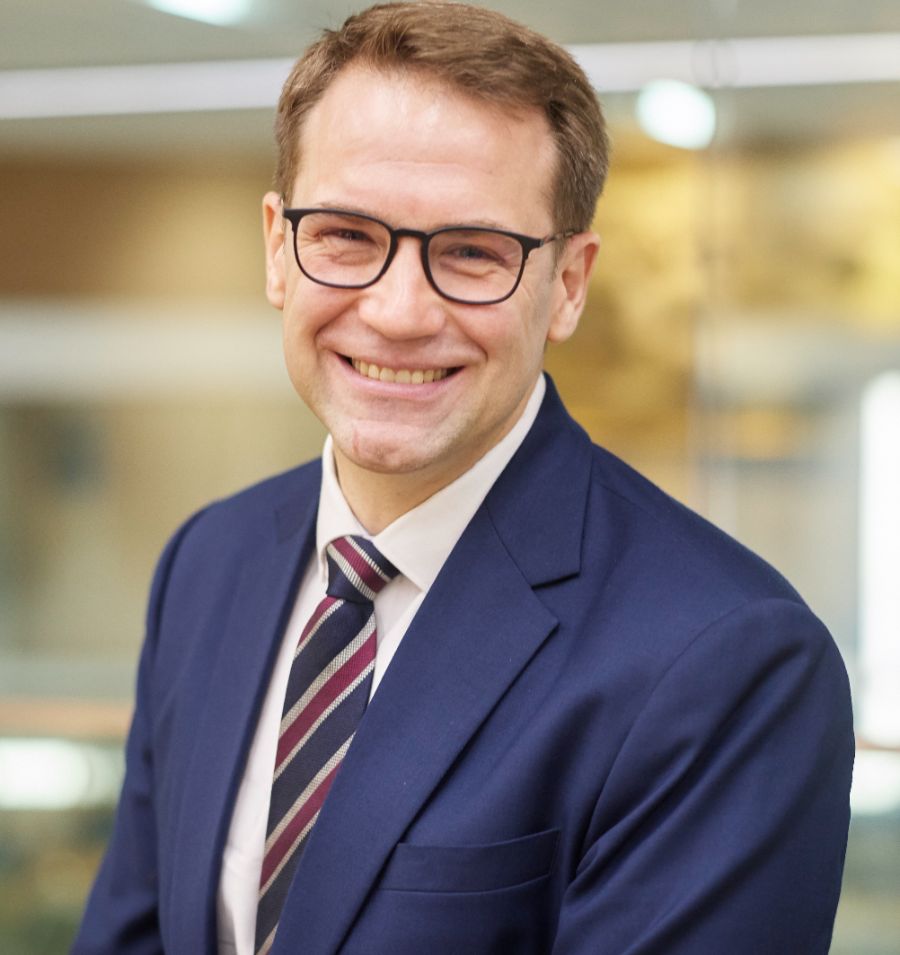
Geoff Howie
Witnessing China’s transformation: A Journey of Internationalisation
21st Century Business Herald: You have observed China’s transformation process firsthand. Could you share some China-related stories that left a deep impression on you, drawing on your own experience?
Geoff Howie: I attended high school in Hong Kong, so I am quite familiar with China. At the time, my father was a pilot at Dragonair, which operated multiple routes to Chinese mainland and carried many business travelers from Hong Kong to the mainland. I took advantage of that convenience to go to Shanghai in the mid-1990s to conduct field research for my master’s thesis, studying the industrial policies Shanghai adopted in the early 1990s to advance modernisation.
For me, then in Hong Kong and close to Shenzhen, reform and opening-up was unfolding right near my home. From the mid-1980s, or even from 1978, witnessing China’s transformation and economic growth has been an exciting experience. The whole world has seen this process, and many people admire China’s economic achievements, especially with the current integration of AI, robotics and automation.
21st Century Business Herald: You mentioned Shenzhen, a frontrunner in China’s reform and opening-up. This year’s APEC meeting will be held in Shenzhen. What suggestions do you have for Shenzhen’s further development? What is your impression of Shenzhen?
Geoff Howie: I would never presume to advise Shenzhen. That reflects Singapore’s cultural DNA: we prefer to learn from colleagues, partners and international friends rather than offer advice to others. Because Singapore has no vast hinterland, our business community also strives to learn from the world, adapt to change and do what it can. There are direct flights between Singapore and Shenzhen. Colleagues who frequently travel between the two places are deeply impressed by Shenzhen’s development over the past two decades. Technology-driven growth has been crucial. So the better question is: what can we learn from Shenzhen?
21st Century Business Herald: The 2026 APEC “China Year” has identified openness, innovation and cooperation as its three priorities. How do you think China and Singapore can work together in these areas?
Geoff Howie: Supply chains in the Asia-Pacific are now highly integrated, making cooperation indispensable. The innovation you mentioned is equally important. Among the five structural themes that investors in Asia-Pacific and globally are watching, the first is AI-driven productivity gains; the second is investment; the third is investment-driven productivity gains; then trade, technology and fragmentation; and finally infrastructure, energy and connectivity.
For Singapore, we are also working to keep our global hub competitive. Being a global hub means a large volume of cross-border financial, professional services and digital business flows with other countries. When it comes to innovation and cooperation, there is much more to explore, especially data, documents and various business processes—the operational links behind the two countries’ macro-level trade flows. In 2026 in particular, this area is changing fast.
21st Century Business Herald: Over the past few decades, China has moved up the value chain, with a significantly higher share of high-end manufactured goods. How do you view this trend?
Geoff Howie: The world has changed a great deal. Growth is no longer driven mainly by exports; the key is comparative advantage. If a company has a comparative advantage—producing robots and automation equipment at much lower cost and offering reliable, trustworthy products—that advantage will work in its favor. That is the overall trend today.
From that perspective, there are reasons to develop comparative advantages for both local and international markets. Building comparative advantage often involves many factors: substantial technological innovation, labor and marketing, and capital markets also play a key role. It is an exciting process.
If you look at many industries in Singapore, you will find they are already quite mature before going public, and they all intersect with the technology theme—whether digital infrastructure, fintech, consumer tech, green tech, medical technology, or robotics and automation. These areas are closely linked. And it all comes back to the fact that technology has made great strides.
Whether one looks at World Bank or IMF data, the challenges of the past decade or two point to a persistent issue: medium-term growth prospects are actually relatively low. The world needs a technological revolution, and we must make it effective in raising growth rates back closer to the levels of 10 to 20 years ago. So I think the world is pinning its hopes on technology as a key growth engine. In many ways, the key today is productivity, not just GDP growth.
Why Singapore became a “super hub” for Chinese firms expanding into Southeast Asia
21st Century Business Herald: Many Chinese companies looking to do business in Southeast Asia may come first to Singapore, which serves as a “super hub” for Chinese firms. Why are more Chinese companies making Singapore their first stop for Southeast Asia?
Geoff Howie: I think one point of strong fit is that in both Singapore and China, policies to promote and sustain growth have gone beyond the fiscal and basic monetary policy tools familiar to many in the West. Industrial policy and more industry-oriented requirements are very important. For example, in Singapore’s auto industry, in four years all cars must be hybrids; in a decade, all must be green battery-electric vehicles. This creates opportunities for further R&D in the EV industry. For example, much work remains in battery diagnostics and maintenance, and extending service life. I think EV resale and used-car dealerships will be areas worth watching. But Singapore’s market is small and cannot complete the transition with local auto suppliers and ecosystem alone; it also needs EV industry ecosystems from China, Thailand and elsewhere. So we rely on trade.
21st Century Business Herald: Speaking of EVs, have you taken a robotaxi in Singapore or China?
Geoff Howie: I have not taken a robotaxi yet. Have you?
21st Century Business Herald: I took one in Shanghai.
Geoff Howie: I hear the experience is excellent and worth looking forward to. I had only seen them in movies before.
21st Century Business Herald: In April this year, Pony.ai, a Guangdong-based tech company, began passenger robotaxi operations in Singapore. Perhaps you will have a chance to try it. How do you view the constant stream of technological innovation from Guangdong companies like this?
Geoff Howie: Because we offer exchange-traded fund (ETF) products, we closely follow the ChiNext and STAR Market, which are very interesting. As an economist in my fifties, I study global medium-term growth forecasts, and in recent years those forecasts have been very low. Progress in AI and productivity in China and elsewhere is very important because related capital expenditure is very high. As you can see, the world is pinning its hopes on AI to boost productivity and drive global economic growth. The important progress and breakthroughs in Guangdong and other regions make us more confident that the world is moving toward higher productivity and more effective growth.
21st Century Business Herald: More Chinese companies are taking the global stage. In which areas can Chinese companies find more opportunities in Singapore?
Geoff Howie: Spend some time in Singapore and you will find that this city-state, though small, offers quite diverse opportunities. First, we love food. We have engaged with many Chinese companies in food and many other sectors. For example, one company highlights the freshness and crispness of its sweet potato snacks; another, a Chinese waste-to-energy company, has listed in Singapore’s capital market and is expanding into Palembang in southern Sumatra, Indonesia, building a waste-to-energy plant with a daily processing capacity of 1,000 tonnes. In 2026, we are in a period of both opportunities and challenges. Chinese companies can go deeper into Southeast Asia and turn some of their investment into real local production capacity.
From “good products” to “good business”
21st Century Business Herald: The world currently faces protectionist challenges. How can Chinese tech companies enter Singapore or other parts of ASEAN in a targeted way?
Geoff Howie: Innovation and AI play a key role and are overarching trends affecting all industries these companies touch. But most importantly, companies should recognize that the ASEAN market is highly diverse, not as unified as the Chinese market. For example, Vietnam’s downstream manufacturing may be very different from Malaysia’s semiconductor manufacturing and engineering services, and Indonesia’s industrial resources are very different from Thailand’s consumer market. So opportunities are very diverse. AI can also help Chinese companies from the outset determine which Southeast Asian market is most suitable. Once the goal is clear, the focus is not which country to choose, but which specific market, and then work can begin to truly land the business in that market.
21st Century Business Herald: Localization is very important. When Chinese companies enter Singapore and other parts of Southeast Asia, what is the biggest pain point in the localization process?
Geoff Howie: Look at it from another angle: the real challenge is how to build local networks. Building these networks requires hiring local employees in Southeast Asia. This is also a good opportunity to cultivate talent, upgrade skills, bring business and ideas here, take root locally and drive the common development of local employees. I think this is a good opportunity, not only for ASEAN but for the world. Localization is crucial. It is a great opportunity, but at the same time, challenges do exist. Companies need to truly integrate into local communities and engage in sincere cooperation so that all parties—including the management of international companies and local employees responsible for actual operations—can achieve win-win outcomes.
21st Century Business Herald: Many Chinese companies have excellent products, but a good product does not necessarily mean success. How can good products be turned into successful business cases?
Geoff Howie: I think the key lies in a holistic view and whether support can be obtained. You mentioned earlier that cooperation is important. Southeast Asia has many government-linked companies that welcome investment and overseas companies, and are willing to cooperate. Even with a good product, companies still need to build local networks, invest in local talent and ensure supplier stability. For overall investment in AI, it is not enough to set up operations locally; companies must also build local production capacity, including securing suppliers. This is currently a major challenge. Demand for a product may expand rapidly, but the various supplies needed for production cannot expand overnight. Therefore, diversified and reliable supplier support is an opportunity that many supply chain service providers in ASEAN are trying to seize.
At the same time, distribution is also important. From 2026 to 2030, Southeast Asia’s exports to the US are expected to grow at a compound annual rate of about 10%. Although Southeast Asia’s export base to the US is lower than China’s, its growth rate over the next five years will be faster. Therefore, cooperating with responsive, efficient and reliable distributors is very important.
Once digital infrastructure, distribution and logistics are in place, the ultimate test of whether a company truly succeeds is whether it can attract local capital to invest in it. As a member of SGX, I pay close attention to this. Companies can choose a primary or secondary listing in Singapore, giving investors access to companies with real operations and expansion in Southeast Asia.
APEC “China Year” injects new momentum
21st Century Business Herald: China and Singapore are continuing to deepen capital markets cooperation. Do you think the 2026 APEC “China Year” will inject new momentum into China-Singapore capital market cooperation and regional capital market connectivity?
Geoff Howie: Yes. Promoting economic growth through capital markets is one of the core tasks of SGX Group’s capital markets business. Developing capital markets is not for the market’s own sake, but to facilitate capital formation, support companies in implementing their business plans and help them achieve growth and transformation. In 2026, China’s National Development and Reform Commission is focusing on boosting consumption growth, including measures on both the demand and supply sides to expand consumption. These measures are very favorable for bilateral trade, help companies increase revenue and improve profit margins, and may prompt them to consider financing in Chinese mainland or overseas capital markets such as Singapore.
21st Century Business Herald: About 35% of SGX-listed companies come from overseas, including many Chinese companies. How will this shape SGX’s market ecosystem?
Geoff Howie: This is exciting. Among SGX-listed companies, beyond the 35% incorporated or headquartered overseas, many also have revenue sources or assets in China. We have some outstanding companies across a wide range of industries, adding breadth and depth to the market and giving investors with different risk appetites and different views on the world and China a rich set of investment choices. For example, we have REITs investing in Chinese assets. We have about nine to ten REITs holding Chinese properties, and many of them cover multiple types of properties. For Singapore companies, China is a very important market. These companies are committed to creating higher value for shareholders and seeking opportunities to deploy assets or generate revenue in China.
21st Century Business Herald: More Chinese companies are doing business in Singapore and elsewhere in Southeast Asia. Looking ahead, how do you view the potential for more Chinese companies to pursue secondary listings in Singapore?
Geoff Howie: Indeed. I think this area will be exciting because it can connect the economies of various parties. Singapore can play a key role in professional services, using digital infrastructure and digital cooperation agreements to help these companies solidify their business footprint across the region. We also have strong engineering expertise. So in many ways, Singapore can serve as a springboard into Southeast Asia, while Chinese companies can also enter these countries directly.
We hope Chinese companies will get to know Singapore’s capital markets. Both the equity and debt markets offer many opportunities for these companies to raise funds. In Singapore’s capital markets, investment tends to follow companies’ actual execution results. S$90 billion was raised over the past nine years, and more than three-quarters of that came from post-listing follow-on fundraising, mainly share placements by companies because their businesses are growing. They may raise funds for acquisitions or to finance expansion into other parts of the world. This capital market has long enjoyed a good reputation and developed its own characteristics, attracting investors who focus on companies’ strategic execution and growth plans. That is very important.
We are advancing an important market reform, specifically for the equity market. Companies therefore have the opportunity to step onto a new stage, communicate with investors and share their growth plans. This also gives investors a chance to gradually build trust in companies’ performance data. When they see performance truly delivered, they can decide whether to trade; if it is not delivered, that is another matter. We do want to strengthen communication between issuers and investors. Companies need to provide clear and detailed information on how they plan to implement their business plans in Southeast Asia. Our capital market very much welcomes such companies.
(作者:吴斌 编辑:和佳,张程,剪辑,李群,设计,李基礼 视频编辑:李群)